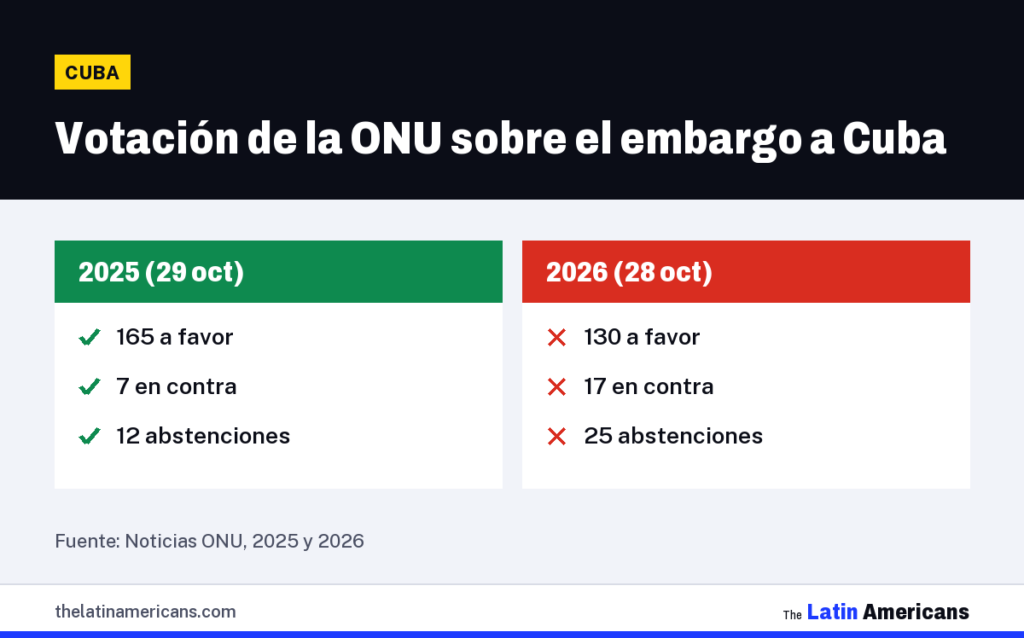
The General Assembly recorded 17 votes against and 25 abstentions, compared with 7 and 12 in 2025. The resolution is nonbinding.
The UN General Assembly approved on Wednesday, October 28, 2026, the resolution calling for an end to the U.S. economic, commercial and financial embargo against Cuba. The result was 130 votes in favor, 17 against and 25 abstentions, according to UN News.
Publication in X
Less support than last year
It is the 34th vote on the issue, according to UN News. In 2025, the resolution received 165 votes in favor, 7 against and 12 abstentions. That is, this year there were 35 fewer votes in favor, 10 more against and 13 more abstentions.
In the first vote, in 1992, there were 59 votes in favor, 3 against and 71 abstentions. Support peaked in 2015, 2016 and 2017, with 191 votes in favor. The Assembly has 193 member states.
Tense debate
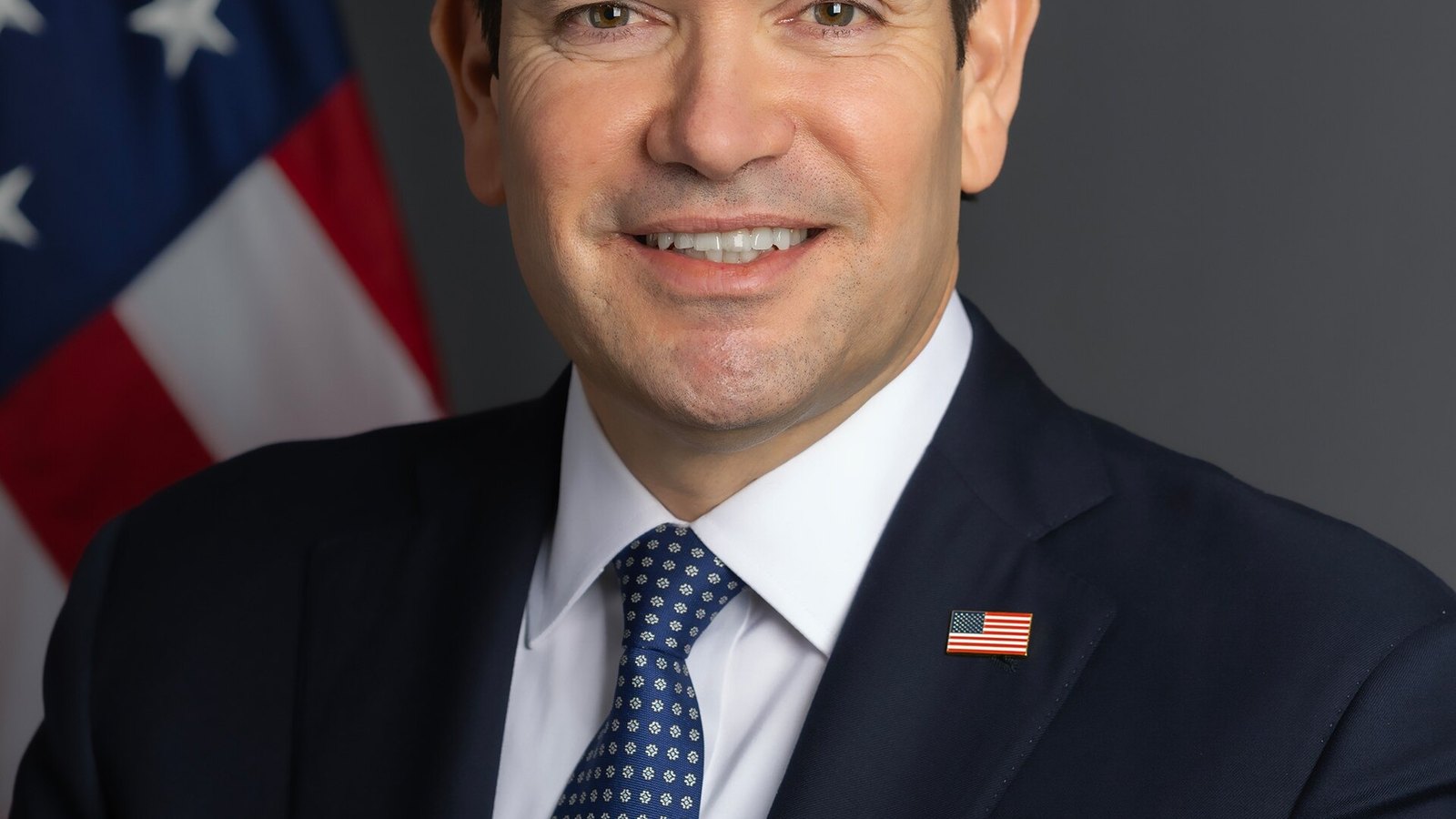
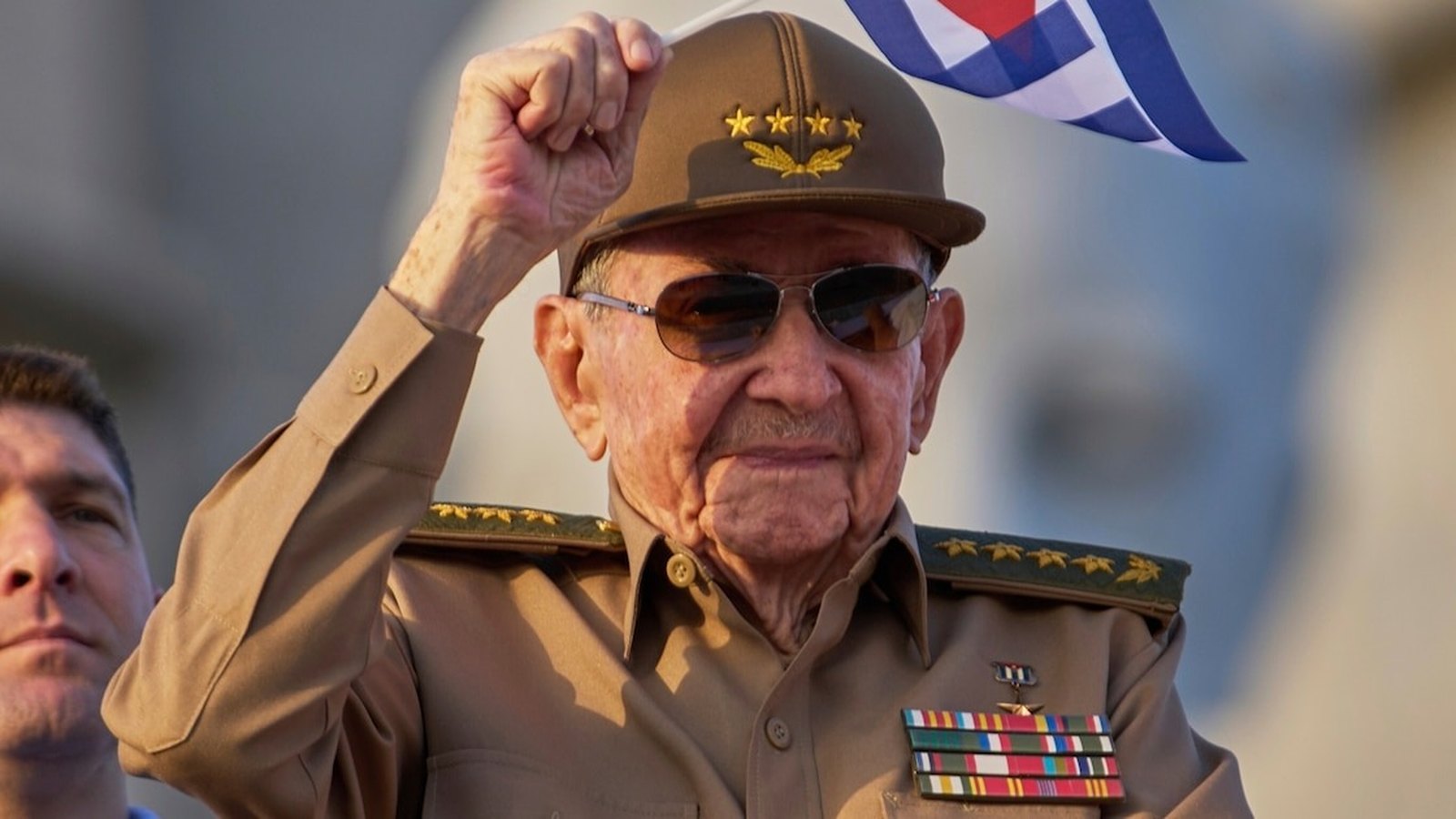
The debate took place Tuesday, October 27. According to UN News, Cuban Foreign Minister Bruno Rodríguez Parrilla interrupted U.S. Ambassador to the UN Mike Waltz during his remarks, and the session was briefly suspended.
Waltz rejected the premise of the debate: he said “there is no blockade” and blamed the Cuban crisis on the island's own government. He also claimed that U.S. exports to Cuba exceeded $876 million in the first eight months of 2026, a figure we have not been able to verify against official trade data.
The text, drafted by Cuba, reaffirms the sovereign equality of states and freedom of trade and navigation, and expresses concern over the Helms-Burton Act of 1996.
What people are saying online
On X, news accounts and users say support for Cuba fell and that several Latin American governments moved to oppose the resolution. Country-by-country figures were not confirmed by an official source for this story, so they are not detailed. Versions about the expulsion of a Cuban diplomat at the UN are also circulating; they have not been confirmed by an official source either.
What does it mean to you?
- The resolution is nonbinding: on its own, it does not change the embargo rules or remittances, travel or trade with Cuba.
- If you send money or travel to the island, the current rules remain those of U.S. agencies (Treasury Department and Commerce Department); check their official pages before acting.
- To follow the issue, the text and the votes are in the General Assembly records at UN News.